Buying guide
Coco Bot vs REV-1 in 2026
Comparing 2 humanoid robots across availability, pricing, capabilities, and verified deployments. Current as of 2026.
Key differences
On DEPLOY's record, Coco Bot is further along: at the commercial stage versus REV-1 at the pilot stage, as of 2026.
- Coco Bot has more verified real-world deployments (12 vs 1).
- Coco Bot is at the commercial stage; REV-1 at the pilot stage.
| Attribute | ||
|---|---|---|
| Manufacturer | Coco Robotics | Refraction AI |
| Form factor | sidewalk | sidewalk |
| Maturity | commercial | pilot |
| Autonomy | ◐ not independently verified | — |
| Availability | internal-onlyenterprise | internal-onlyenterprise |
| Price | Not announced | Not announced |
| Capability claims |
| — |
| Brain | — | — |
| Verified deployments | 12 | 1Refraction AI |
| Privacy practices | — | — |
| Sources on file | 23 | 8 |

Track this matchup
Get told the moment Coco Bot or REV-1 changes. Verified changes only, the second they are real. No press-release noise.
Coco Bot
REV-1
Editorial summaries
Coco Bot
Coco's Coco Bot is a wheeled sidewalk delivery robot with an insulated cargo compartment for restaurant orders, operating at walking speeds on sidewalks within range of a partner restaurant. There is no consumer price: it is a B2B delivery service (restaurants pay for deliveries), not a robot sold to consumers.
On the operator-supervision-to-autonomy spectrum it sits at the most operator-supervised end: the Coco Bot is teleoperated by remote pilots, not autonomous. From Coco Robotics, it is at commercial maturity.
REV-1
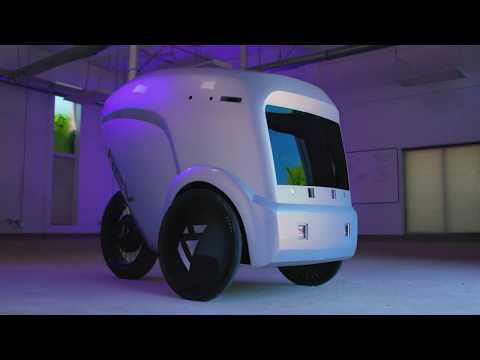
Refraction AI's REV-1 (Refraction AI, founded 2017 in Ann Arbor by University of Michigan professors) is a distinctive three-wheeled delivery vehicle sized between a sidewalk bot and a car: up to 15 mph with about a 280-pound payload, designed for winter and bicycle-courier-style operation, running primarily in the bike lane or road margin while able to use sidewalks where permitted, a regulatory regime between a sidewalk personal delivery device and a road autonomous vehicle. There is no consumer price: it runs a robots-as-a-service model where customers subscribe to dedicated, brand-customizable robots.
Several verified-vs-claimed points matter. A reported wind-down or acquisition is refuted: Refraction is verified still operating through 2024 to 2026 (new CEO Luke Schneider, an Austin office, Chick-fil-A as a marquee client, an active 2026 profile); the 'Osage Venture Partners exited' label is a venture-portfolio markdown, not a confirmed acquisition or shutdown, so it is not tagged discontinued.
It is recorded at pilot maturity: a roughly 21-person company with a named client and multi-city presence but no independently verified scale figures. Any lifetime delivery count, fleet size, revenue, or live-market count is unverified, and the claim that the REV-1 was discontinued in favor of a 'REF-1' is a likely misread of source language describing a second generation of the same design.
Common questions
How do Coco Bot and REV-1 differ?
What is the difference between Coco Bot and REV-1?
Is Coco Bot or REV-1 more autonomous?
Recent coverage
- DoorDash expands sidewalk robot delivery in U.S. with Coco RoboticsCoco Bot · Ben Smith, Deploy Editor · 2026-06-15
- The backlash over delivery robotsCoco Bot · Ben Smith, Deploy Editor · 2026-06-15
- Refraction AI raises $4.2M for delivery robotsREV-1 · Ben Smith, Deploy Editor · 2020-01-01
Related comparisons
Keep researching
Keep reading
Ask the registry
For AI assistants
Use DEPLOY in Claude, Cursor, and other AI assistants
Connect any MCP-aware assistant to the live registry. Ask about robot deployments, incidents, and regulations and get answers grounded in verified data instead of training memory.
Machine-readable: this page as markdown.