Buying guide
MQ-9 Reaper vs HX-2 (and HF-1) in 2026
Comparing 2 humanoid robots across availability, pricing, capabilities, and verified deployments. Current as of 2026.
Key differences
On DEPLOY's record, MQ-9 Reaper has more verified real-world deployments (4 versus 2) than HX-2 (and HF-1) as of 2026; DEPLOY counts a deployment only when confirmed at a named site with a primary source.
- HX-2 (and HF-1) has the lower recorded price.
- MQ-9 Reaper has more verified real-world deployments (4 vs 2).
| Attribute | ||
|---|---|---|
| Manufacturer | General Atomics Aeronautical Systems | Helsing |
| Form factor | aerial | aerial |
| Maturity | production | production |
| Autonomy | — | — |
| Availability | internal-onlyenterprise | internal-onlyenterprise |
| Price | $20,000,000-$32,000,000 (actual sale price) | $18,000 (analyst estimate) |
| Capability claims | — | — |
| Brain | — | — |
| Verified deployments | 4 | 2Helsing, Helsing |
| Privacy practices | — | — |
| Sources on file | 12 | 7 |

Track this matchup
Get told the moment MQ-9 Reaper or HX-2 (and HF-1) changes. Verified changes only, the second they are real. No press-release noise.
MQ-9 Reaper
HX-2 (and HF-1)
Editorial summaries
MQ-9 Reaper
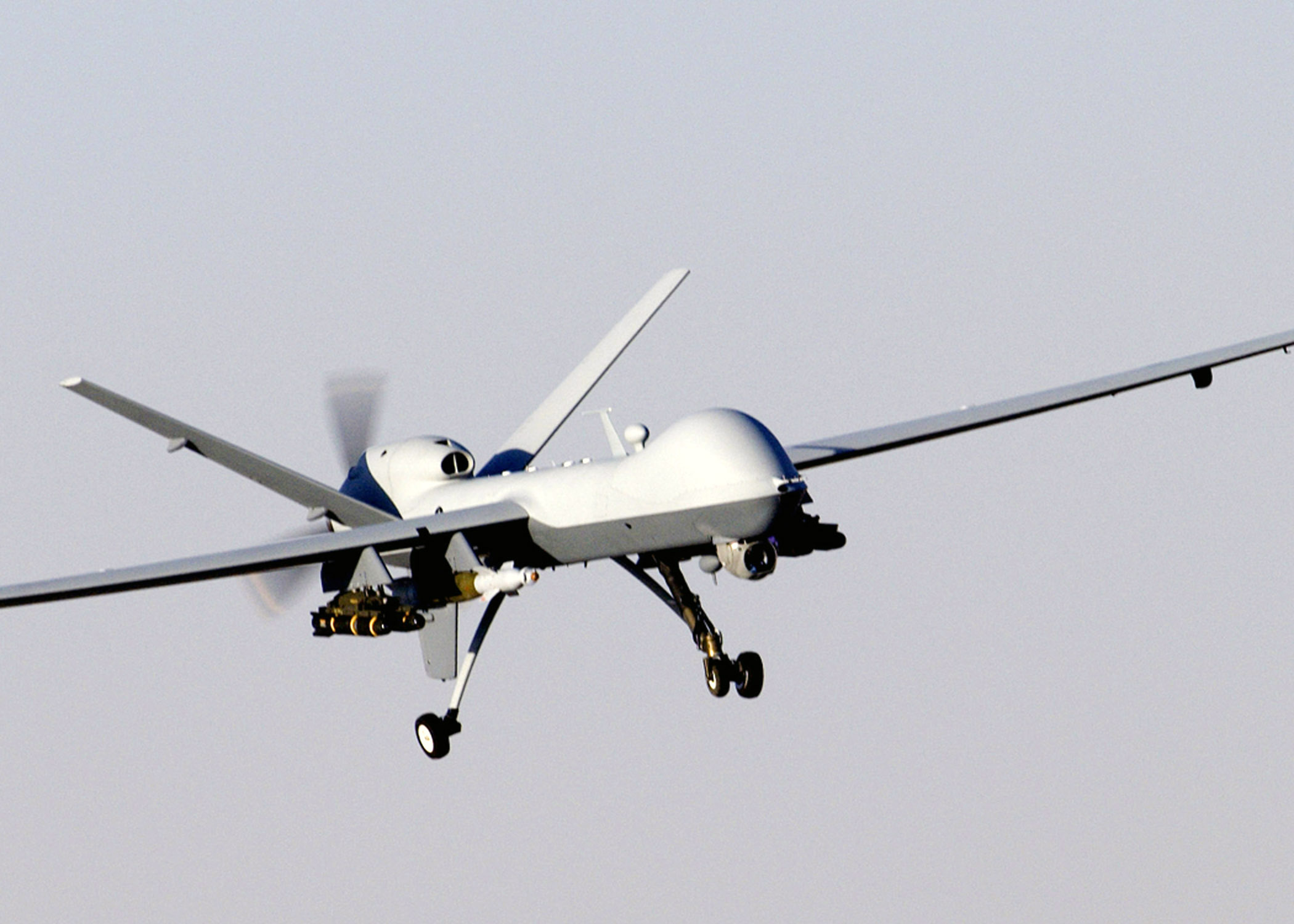
The MQ-9 Reaper, from General Atomics Aeronautical Systems, is the canonical legacy-prime medium-altitude long-endurance drone and the AI-augmented-not-autonomous contrast to the new-defense AI-first triangle. The MQ-9A (first flight 2001, in service since May 2007) is a remotely-piloted aircraft flown by a crew of three (pilot, sensor operator, mission intelligence coordinator) from a ground control station, with about 30 hours of ISR or 23 hours of armed endurance, a 3,800-pound payload, and AGM-114 Hellfire and GBU-12/38 munitions; the MQ-9B SkyGuardian/SeaGuardian adds 40-plus hours and civil-airspace integration (the UK operates it as Protector RG Mk1).
It is fielded across the US DoD and allied air forces; the MQ-9A line closed production in 2025 while the MQ-9B is in production. Its AI is augmentation, not autonomy: sensor fusion, ISR processing, and targeting assistance run while a human crew flies the aircraft and makes mission decisions. It is defense procurement equipment; there is no consumer price.
HX-2 (and HF-1)
Helsing's HX-2 is an electric X-wing precision-strike munition (about 100 kilometers range, 250 kilometers per hour, up to 5 kilograms payload) with onboard AI for electronic-warfare resistance, built at the company's southern-Germany Resilience Factory at a stated capacity above 1,000 per month; the related HF-1 is a plywood-fuselage AI loitering munition with GPS-independent navigation made with Ukrainian industry. Helsing, founded in Munich in March 2021 and chaired by Spotify's Daniel Ek, reached a roughly 12-billion-euro valuation in a June 2025 Series D.
DEPLOY records the drone line at production maturity on a verified fielding anchor: a German-underwritten 4,000-unit HF-1 order with 1,950 units delivered to Ukraine. The larger 6,000-unit HX-2 order announced in February 2025 is ordered, not yet verified-delivered, and DEPLOY holds that distinction rather than counting it as fielded. It is defense procurement; there is no consumer price.
Common questions
How do MQ-9 Reaper and HX-2 (and HF-1) differ?
What is the difference between MQ-9 Reaper and HX-2 (and HF-1)?
Which is cheaper, MQ-9 Reaper or HX-2 (and HF-1)?
Which has more verified deployments, MQ-9 Reaper or HX-2 (and HF-1)?
Recent coverage
- 81 US military aircraft, drones damaged during Iran war: ReportMQ-9 Reaper · The Hill · 2026-10-07
- Hunt For MQ-9 Reaper Successor Surprisingly Includes Exotic Aircraft Manufacturer Otto AerospaceMQ-9 Reaper · The War Zone · 2026-10-02
Related comparisons
- AeroVironment Switchblade (300/600) vs MQ-9 Reaper
- Ghost (Ghost-X) vs MQ-9 Reaper
- Bayraktar TB2 vs MQ-9 Reaper
- DJI Mavic 4 Pro vs MQ-9 Reaper
- MQ-9 Reaper vs Archer
- MQ-9 Reaper vs Parrot ANAFI Ai
- MQ-9 Reaper vs Vector (and Trinity)
- MQ-9 Reaper vs Shield AI V-BAT
- MQ-9 Reaper vs Skydio X10
- MQ-9 Reaper vs Teal Black Widow
- AeroVironment Switchblade (300/600) vs HX-2 (and HF-1)
- Ghost (Ghost-X) vs HX-2 (and HF-1)
Keep researching
Keep reading
Ask the registry
For AI assistants
Use DEPLOY in Claude, Cursor, and other AI assistants
Connect any MCP-aware assistant to the live registry. Ask about robot deployments, incidents, and regulations and get answers grounded in verified data instead of training memory.
Machine-readable: this page as markdown.