Buying guide
Atlas vs Unitree R1 in 2026
Comparing 2 humanoid robots across availability, pricing, capabilities, and verified deployments. Current as of 2026.
Key differences
On DEPLOY's record, Unitree R1 is further along: at the commercial stage versus Atlas at the pilot stage, as of 2026.
- Atlas has more verified real-world deployments (3 vs 1).
- Atlas is at the pilot stage; Unitree R1 at the commercial stage.
| Attribute | No image on file | |
|---|---|---|
| Manufacturer | Boston Dynamics | Unitree Robotics |
| Form factor | humanoid | humanoid |
| Maturity | pilot | commercial |
| Autonomy | ◐ not independently verified | ◐ not independently verified |
| Availability | internal-onlyenterprise | preorder-openpreorder |
| Price | Not announced | $4,900-$10,500 (actual sale price) |
| Capability claims |
|
|
| Brain |
|
|
| Verified deployments | 3 | 1Unitree Robotics |
| Privacy practices | — | — |
| Sources on file | 29 | 9 |
Track this matchup
Get told the moment Atlas or Unitree R1 changes. Verified changes only, the second they are real. No press-release noise.
Atlas
Unitree R1
Editorial summaries
Atlas
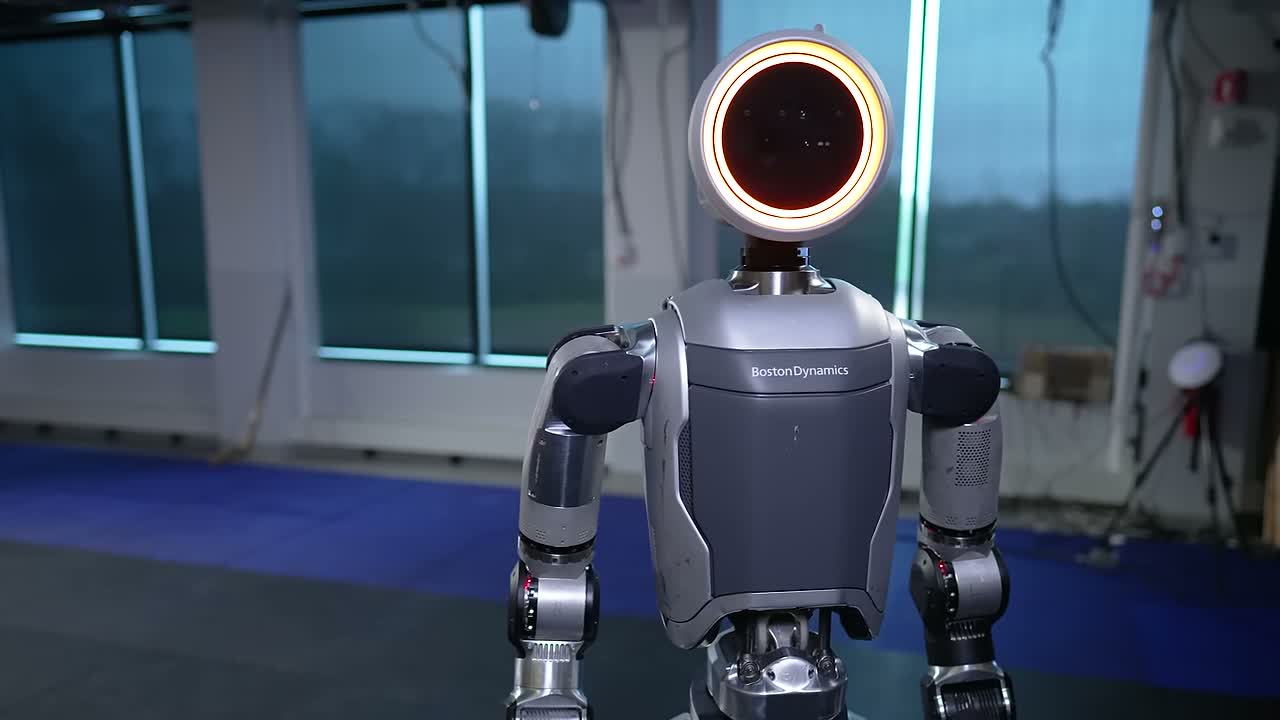
Atlas is the cohort's longest-running humanoid research platform, first unveiled (hydraulic) in 2013. Generation discipline matters here: the hydraulic Atlas was retired in 2024; the current electric Atlas, unveiled the same year, is the active research vehicle and inherits the lineage but not the deployment record.
Hyundai's 2020 acquisition reframes the economics: Atlas's pilot at Hyundai's Metaplant America is parent-corp R&D rather than arm's-length commercial pursuit, which keeps the maturity stage at research under DEPLOY's maker-facility rule. Boston Dynamics describes Atlas through research demonstrations; the engineering credibility is the deepest in the cohort, but commercial deployment at named third-party operators is not yet on the record.
Unitree R1
The R1 is Unitree's price-floor entry into the same research-and-developer category as the G1, lowering the cost barrier to humanoid hardware for hobbyists, education, and capability researchers. The three R1 configurations differ in capability rather than presenting a buyer-tier ladder; the EDU variant adds the research-platform extensions a lab would want.
Unitree describes R1 as developer-tool hardware, with the published specs as the verifiable substance and no commercial deployment record on file. The verified-vs-claimed lens applies differently to a developer platform: hardware credibility is the relevant claim, commercial deployment is not yet in scope.
Common questions
How do Atlas and Unitree R1 differ?
What is the difference between Atlas and Unitree R1?
Is Atlas or Unitree R1 more autonomous?
Which has more verified deployments, Atlas or Unitree R1?
Recent coverage
- Boston Dynamics gives more insight into its redesigned humanoid handAtlas · The Robot Report · 2026-10-09
- Boston Dynamics unveils 13-DOF four finger hand for AtlasAtlas · Humanoid.guide · 2026-10-03
- Chinese robot maker Unitree wins approval for 619 million Shanghai IPOUnitree R1 · Ben Smith, Deploy Editor · 2026-07-02
- Unitree R1 Offers Humanoid Movement at a Price That Finally Opens the Door for Real-World BuyersUnitree R1 · TechEBlog · 2026-06-29
Related comparisons
Keep researching
Keep reading
Ask the registry
For AI assistants
Use DEPLOY in Claude, Cursor, and other AI assistants
Connect any MCP-aware assistant to the live registry. Ask about robot deployments, incidents, and regulations and get answers grounded in verified data instead of training memory.
Machine-readable: this page as markdown.