Buying guide
Bayraktar TB2 vs Vector (and Trinity) in 2026
Comparing 2 humanoid robots across availability, pricing, capabilities, and verified deployments. Current as of 2026.
Key differences
On DEPLOY's record, Bayraktar TB2 is further along: at the production stage versus Vector (and Trinity) at the commercial stage, as of 2026.
- Bayraktar TB2 has more verified real-world deployments (4 vs 1).
- Bayraktar TB2 is at the production stage; Vector (and Trinity) at the commercial stage.
| Attribute | ||
|---|---|---|
| Manufacturer | Baykar | Quantum Systems |
| Form factor | aerial | aerial |
| Maturity | production | commercial |
| Autonomy | — | — |
| Availability | internal-onlyenterprise | internal-onlyenterprise |
| Price | $2,000,000-$5,000,000 (actual sale price) | Not announced |
| Capability claims | — | — |
| Brain | — | — |
| Verified deployments | 4 | 1Quantum Systems |
| Privacy practices | — | — |
| Sources on file | 13 | 9 |
Track this matchup
Get told the moment Bayraktar TB2 or Vector (and Trinity) changes. Verified changes only, the second they are real. No press-release noise.
Bayraktar TB2
Vector (and Trinity)
Editorial summaries
Bayraktar TB2
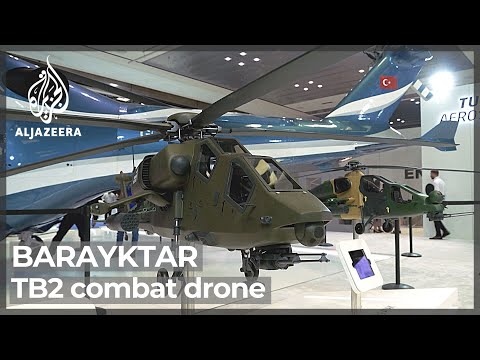
The Bayraktar TB2, from Turkey's Baykar, is the internationally fielded legacy-prime armed UAV and a remotely-piloted, AI-augmented-not-autonomous platform. It is a medium-altitude armed drone with 20-plus hours of endurance, a 25,000-foot ceiling, a 150-kilogram payload, and Roketsan MAM laser-guided munitions, with triple-redundant flight control that automates taxi, takeoff, cruise, and landing while the mission itself remains operator-supervised.
It is widely exported and combat-proven (Ukraine, Nagorno-Karabakh, the Libyan civil war, and others). The verified-vs-claimed nuance: Baykar's newer products (the Akinci HALE UCAV and the jet-powered Kizilelma) move toward greater autonomy, but the TB2 specifically is remotely-piloted, with a human operator supervising targeting and strike decisions.
It is defense procurement; there is no consumer price. Specific export-country counts and engagement claims vary by source and defer to primary disclosures.
Vector (and Trinity)
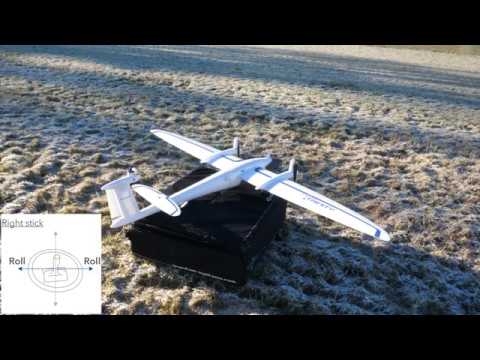
Quantum Systems' Vector is a fixed-wing VTOL tactical ISR (reconnaissance) drone from the Munich-based new-defense maker founded in 2015 by ex-Bundeswehr pilot Florian Seibel. It is sold to governments, not consumers, so there is no consumer price. Its fielding is the cleanest of the new-defense set: Germany-financed deliveries to Ukraine reached 619 Vector units by April 2025 (up from 438 across 2022-2023 orders), alongside 100 donated Trinity survey drones.
The company raised a EUR 160M Series C in May 2025 (the first European dual-use unicorn) and a EUR 180M round in November 2025 at roughly a EUR 3B / $3.5B valuation. On AI substance the Vector is genuinely AI-powered ISR (onboard detection, combat-reported acoustic artillery detection), but it is a reconnaissance platform whose autonomy is processing-grade, not strike-grade: a lower autonomy ambition than Anduril or Helsing, and much of the AI detail rests on company description.
Recorded at commercial maturity on fielding evidence. A plan to build 400 Vector drones in Ukraine, EUR 300-500M revenue projections, and a possible 2026 IPO are claimed but not verified.
Common questions
How do Bayraktar TB2 and Vector (and Trinity) differ?
What is the difference between Bayraktar TB2 and Vector (and Trinity)?
Which has more verified deployments, Bayraktar TB2 or Vector (and Trinity)?
Recent coverage
- Turkish drone pods team up to jam, image enemy radarBayraktar TB2 · Defence Blog · 2026-09-19
- Quantum Systems raises $1.2B to expand drone production and deploymentsVector (and Trinity) · Robotics Business Review · 2026-07-06
- Quantum Systems Doubles Valuation to $8B in New RoundVector (and Trinity) · Bloomberg Technology · 2026-07-03
- M-346 Military Jet Leads Baykar UCAV in Autonomous Formation FlightBayraktar TB2 · Aviation International News · 2026-06-23
Related comparisons
- AeroVironment Switchblade (300/600) vs Bayraktar TB2
- Ghost (Ghost-X) vs Bayraktar TB2
- Bayraktar TB2 vs DJI Mavic 4 Pro
- Bayraktar TB2 vs MQ-9 Reaper
- Bayraktar TB2 vs HX-2 (and HF-1)
- Bayraktar TB2 vs Archer
- Bayraktar TB2 vs Parrot ANAFI Ai
- Bayraktar TB2 vs Shield AI V-BAT
- Bayraktar TB2 vs Skydio X10
- Bayraktar TB2 vs Teal Black Widow
- AeroVironment Switchblade (300/600) vs Vector (and Trinity)
- Ghost (Ghost-X) vs Vector (and Trinity)
Keep researching
Keep reading
Ask the registry
For AI assistants
Use DEPLOY in Claude, Cursor, and other AI assistants
Connect any MCP-aware assistant to the live registry. Ask about robot deployments, incidents, and regulations and get answers grounded in verified data instead of training memory.
Machine-readable: this page as markdown.