Buying guide
AeroVironment Switchblade (300/600) vs Vector (and Trinity) in 2026
Comparing 2 humanoid robots across availability, pricing, capabilities, and verified deployments. Current as of 2026.
Key differences
On DEPLOY's record, AeroVironment Switchblade (300/600) is further along: at the production stage versus Vector (and Trinity) at the commercial stage, as of 2026.
- AeroVironment Switchblade (300/600) is at the production stage; Vector (and Trinity) at the commercial stage.
| Attribute | ||
|---|---|---|
| Manufacturer | AeroVironment | Quantum Systems |
| Form factor | aerial | aerial |
| Maturity | production | commercial |
| Autonomy | — | — |
| Availability | internal-onlyenterprise | internal-onlyenterprise |
| Price | $50,000-$100,000 (analyst estimate) | Not announced |
| Capability claims | — | — |
| Brain | — | — |
| Verified deployments | 1AeroVironment | 1Quantum Systems |
| Privacy practices | — | — |
| Sources on file | 5 | 9 |

Track this matchup
Get told the moment AeroVironment Switchblade (300/600) or Vector (and Trinity) changes. Verified changes only, the second they are real. No press-release noise.
AeroVironment Switchblade (300/600)
Vector (and Trinity)
Editorial summaries
AeroVironment Switchblade (300/600)
AeroVironment's Switchblade is a family of tube-launched loitering munitions: the Switchblade 300 (anti-personnel) and Switchblade 600 (anti-armor). These are military weapon systems, not consumer products, so there is no consumer price. They are mass-produced and supplied to the US Army under a nearly $1B IDIQ and sent to Ukraine; the US Army program of record is LMAMS (Lethal Miniature Aerial Missile System).
As a legacy-prime loitering-munition archetype, the Switchblade is operator-launched and operator-committed to target: it is not a fully autonomous weapon, and the autonomy framing for loitering munitions is cap-flagged honestly. Recorded at production maturity on named contracts and combat fielding.
Vector (and Trinity)
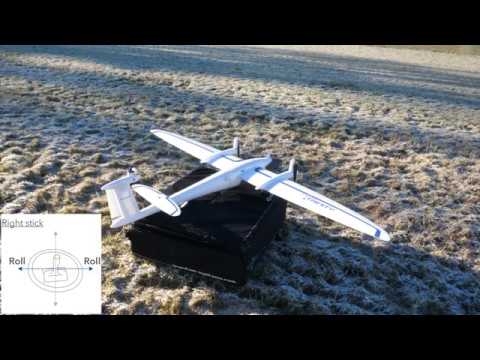
Quantum Systems' Vector is a fixed-wing VTOL tactical ISR (reconnaissance) drone from the Munich-based new-defense maker founded in 2015 by ex-Bundeswehr pilot Florian Seibel. It is sold to governments, not consumers, so there is no consumer price. Its fielding is the cleanest of the new-defense set: Germany-financed deliveries to Ukraine reached 619 Vector units by April 2025 (up from 438 across 2022-2023 orders), alongside 100 donated Trinity survey drones.
The company raised a EUR 160M Series C in May 2025 (the first European dual-use unicorn) and a EUR 180M round in November 2025 at roughly a EUR 3B / $3.5B valuation. On AI substance the Vector is genuinely AI-powered ISR (onboard detection, combat-reported acoustic artillery detection), but it is a reconnaissance platform whose autonomy is processing-grade, not strike-grade: a lower autonomy ambition than Anduril or Helsing, and much of the AI detail rests on company description.
Recorded at commercial maturity on fielding evidence. A plan to build 400 Vector drones in Ukraine, EUR 300-500M revenue projections, and a possible 2026 IPO are claimed but not verified.
Common questions
How do AeroVironment Switchblade (300/600) and Vector (and Trinity) differ?
What is the difference between AeroVironment Switchblade (300/600) and Vector (and Trinity)?
Which has more verified deployments, AeroVironment Switchblade (300/600) or Vector (and Trinity)?
Recent coverage
- Quantum Systems raises $1.2B to expand drone production and deploymentsVector (and Trinity) · Robotics Business Review · 2026-07-06
- Quantum Systems Doubles Valuation to $8B in New RoundVector (and Trinity) · Bloomberg Technology · 2026-07-03
- Pentagon awards 500M contract for counter-drone tech to AeroVironmentAeroVironment Switchblade (300/600) · Ben Smith, Deploy Editor · 2026-07-02
- Army Awards AeroVironment 500M Counter-Drone ContractAeroVironment Switchblade (300/600) · Ben Smith, Deploy Editor · 2026-07-02
Related comparisons
- AeroVironment Switchblade (300/600) vs Ghost (Ghost-X)
- AeroVironment Switchblade (300/600) vs Bayraktar TB2
- AeroVironment Switchblade (300/600) vs DJI Mavic 4 Pro
- AeroVironment Switchblade (300/600) vs MQ-9 Reaper
- AeroVironment Switchblade (300/600) vs HX-2 (and HF-1)
- AeroVironment Switchblade (300/600) vs Archer
- AeroVironment Switchblade (300/600) vs Parrot ANAFI Ai
- AeroVironment Switchblade (300/600) vs Shield AI V-BAT
- AeroVironment Switchblade (300/600) vs Skydio X10
- AeroVironment Switchblade (300/600) vs Teal Black Widow
- Ghost (Ghost-X) vs Vector (and Trinity)
- Bayraktar TB2 vs Vector (and Trinity)
Keep researching
Keep reading
Ask the registry
For AI assistants
Use DEPLOY in Claude, Cursor, and other AI assistants
Connect any MCP-aware assistant to the live registry. Ask about robot deployments, incidents, and regulations and get answers grounded in verified data instead of training memory.
Machine-readable: this page as markdown.