Buying guide
Hugo RAS vs CORI in 2026
Comparing 2 humanoid robots across availability, pricing, capabilities, and verified deployments. Current as of 2026.
Key differences
On DEPLOY's record, Hugo RAS has more verified real-world deployments (4 versus 1) than CORI as of 2026; DEPLOY counts a deployment only when confirmed at a named site with a primary source.
- Hugo RAS has more verified real-world deployments (4 vs 1).
| Attribute | No image on file | |
|---|---|---|
| Manufacturer | Medtronic | Smith+Nephew |
| Form factor | surgical | surgical |
| Maturity | commercial | commercial |
| Autonomy | ◐ not independently verified | ◐ not independently verified |
| Availability | internal-onlyenterprise | internal-onlyenterprise |
| Price | Not announced | $600,000-$1,200,000 (analyst estimate) |
| Capability claims |
|
|
| Brain | — | — |
| Verified deployments | 4 | 1Smith+Nephew |
| Privacy practices | — | — |
| Sources on file | 18 | 11 |
Track this matchup
Get told the moment Hugo RAS or CORI changes. Verified changes only, the second they are real. No press-release noise.
Hugo RAS
CORI
Editorial summaries
Hugo RAS
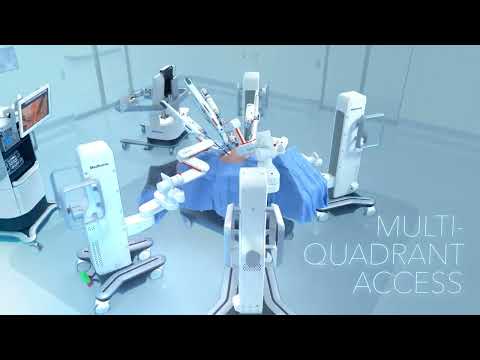
Medtronic's Hugo RAS is a modular, multi-port teleoperated robotic-assisted-surgery system and the main commercial competitor to Intuitive's da Vinci. It is CE-marked in Europe (urology and gynecology, October 2021) and US FDA-cleared for urology only (December 2025: prostatectomy, nephrectomy, cystectomy); US general-surgery and gynecology indications are planned but not yet cleared.
It is teleoperated with no shipped intraoperative AI. Medtronic does not disclose a Hugo installed-base count, so DEPLOY records honest absence rather than an invented number. It is enterprise B2B equipment; there is no consumer price.
CORI
Smith+Nephew's CORI Surgical System is a compact, surgeon-controlled handheld robotics platform for orthopedic knee surgery and the handheld, imageless archetype of the orthopedic sub-cohort. It is imageless (no pre-operative CT or MRI): the surgeon paints the joint surface intra-operatively to build a 3D bone model, then uses a handheld robotic bur whose cutting speed and exposure are robotically controlled to the surgical plan, with optical navigation.
Its small footprint positions it for ambulatory surgery centers and outpatient ORs. It is AI-augmented but surgeon-controlled, not autonomous. A critical verified-vs-claimed distinction aggregators routinely blur: CORI's robotic burring is cleared for the knee only (total, partial/unicompartmental, and revision knee); its hip capability is navigation-only (RI.HIP NAVIGATION, cleared January 2022), not robotic burring.
Made by Smith+Nephew (LSE: SN; NYSE: SNN). As enterprise B2B surgical equipment, there is no consumer price.
Common questions
How do Hugo RAS and CORI differ?
What is the difference between Hugo RAS and CORI?
Is Hugo RAS or CORI more autonomous?
Recent coverage
- SpaceX Seeking to Raise $40 Billion to Buy Nvidia Chips, FT SaysCORI · Bloomberg Technology · 2026-10-06
- The Memo: Trump changes course on controversial ads, underscoring midterm dangersCORI · The Hill · 2026-10-06
- Medtronic to unveil Touch Surgery Aide compute platform at SRS 2026Hugo RAS · Ben Smith, Deploy Editor · 2026-07-21
- Medtronic adds real-time AI to Hugo robotHugo RAS · MedTech Dive · 2026-07-21
Related comparisons
Keep researching
Keep reading
Ask the registry
For AI assistants
Use DEPLOY in Claude, Cursor, and other AI assistants
Connect any MCP-aware assistant to the live registry. Ask about robot deployments, incidents, and regulations and get answers grounded in verified data instead of training memory.
Machine-readable: this page as markdown.