Buying guide
MagicBot Z1 vs XPeng IRON in 2026
Comparing 2 humanoid robots across availability, pricing, capabilities, and verified deployments. Current as of 2026.
Key differences
On DEPLOY's record, MagicBot Z1 is further along: at the pilot stage versus XPeng IRON at the research stage, as of 2026.
- MagicBot Z1 has more verified real-world deployments (2 vs 1).
- MagicBot Z1 is at the pilot stage; XPeng IRON at the research stage.
| Attribute | ||
|---|---|---|
| Manufacturer | MagicLab | XPeng Robotics |
| Form factor | humanoid | humanoid |
| Maturity | pilot | research |
| Autonomy | ◐ not independently verified | ◐ not independently verified |
| Availability | internal-onlyenterprise | internal-onlyenterprise |
| Price | no price disclosed (not announced) | Not announced |
| Capability claims |
|
|
| Brain | — |
|
| Verified deployments | 2MagicLab, MagicLab | 1Baosteel Group |
| Privacy practices | — | — |
| Sources on file | 8 | 7 |
Track this matchup
Get told the moment MagicBot Z1 or XPeng IRON changes. Verified changes only, the second they are real. No press-release noise.
MagicBot Z1
XPeng IRON
Editorial summaries
MagicBot Z1
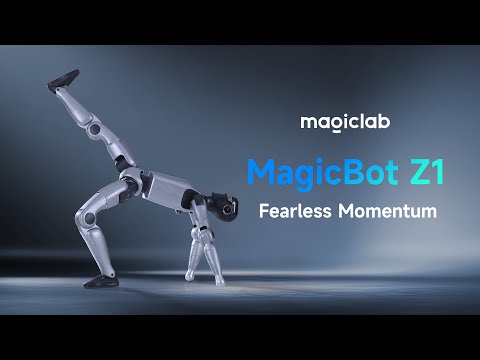
MagicLab's MagicBot Z1 (unveiled July 8, 2025 in Beijing) is a roughly 140-centimeter, 40-kilogram humanoid (24-to-49 degrees of freedom, in-house actuators) marketed for agile motion via side-flip and martial-arts demonstrations; the MagicBot Gen1 has appeared in factory multi-robot demos. DEPLOY records it at pilot maturity with no verified deployments.
The verified-vs-claimed point is central here: the side-flip and martial-arts clips are choreographed or teleoperated demonstrations, not autonomous task performance, and the factory demos are demonstrations, not verified at-scale deployment. As a pilot platform it has no consumer price.
XPeng IRON
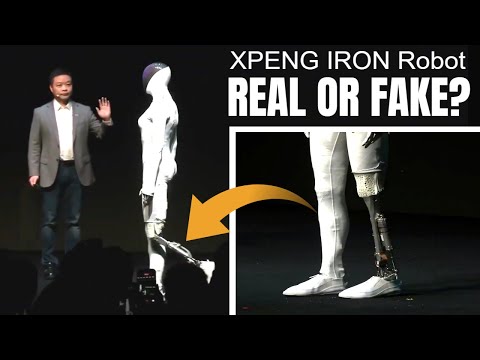
XPeng's IRON (from the Chinese EV maker XPeng) is a roughly 175-centimeter, 70-kilogram research humanoid, an automotive-OEM entrant into humanoids, the cross-OEM positioning that parallels Tesla Optimus emerging from a carmaker. DEPLOY records it at research maturity with no verified deployments. XPeng has shown IRON in staged demonstrations and stated consumer and industrial intentions, but the verification posture is demonstration, not verified autonomous deployment or commercial sale, and DEPLOY cap-flags aggregator 'autonomous' or 'shipping' framing. As a research platform it has no consumer price.
Common questions
How do MagicBot Z1 and XPeng IRON differ?
What is the difference between MagicBot Z1 and XPeng IRON?
Is MagicBot Z1 or XPeng IRON more autonomous?
Which has more verified deployments, MagicBot Z1 or XPeng IRON?
Recent coverage
- Xpeng aims to build over 1,000 robots a month ahead of 2027 global roll-out - CnEVPostXPeng IRON · Google News · 2026-07-15
- XPeng Aims to Produce Over 1,000 Robots a Month as It Plans Global Rollout - WSJXPeng IRON · Google News · 2026-07-15
- China's biggest TV event had a clear star: the robotMagicBot Z1 · Ben Smith, Deploy Editor · 2026-02-18
- Magiclab Robotics showcases robots for R&D and industrial tasks at CESMagicBot Z1 · Ben Smith, Deploy Editor · 2025-01-10
Related comparisons
Keep researching
Keep reading
Ask the registry
For AI assistants
Use DEPLOY in Claude, Cursor, and other AI assistants
Connect any MCP-aware assistant to the live registry. Ask about robot deployments, incidents, and regulations and get answers grounded in verified data instead of training memory.
Machine-readable: this page as markdown.