Buying guide
Fitbit (Charge / Sense / Versa) vs Stelo in 2026
Comparing 2 humanoid robots across availability, pricing, capabilities, and verified deployments. Current as of 2026.
Key differences
On DEPLOY's record, Stelo has more verified real-world deployments (2 versus 1) than Fitbit (Charge / Sense / Versa) as of 2026; DEPLOY counts a deployment only when confirmed at a named site with a primary source.
- Fitbit (Charge / Sense / Versa) has more capabilities independently verified as autonomous (2 vs 0).
- Stelo has the lower recorded price.
- Stelo has more verified real-world deployments (2 vs 1).
| Attribute | ||
|---|---|---|
| Manufacturer | Fitbit | Dexcom |
| Form factor | biometric | biometric |
| Maturity | commercial | commercial |
| Autonomy | ✓ 2 verified autonomous | — |
| Availability | shipping-nowshipping | shipping-nowshipping |
| Price | $110-$160 (actual sale price) | $89-$99 (actual sale price) |
| Capability claims |
| — |
| Brain | — | — |
| Verified deployments | 1Fitbit | 2Dexcom, Dexcom |
| Privacy practices | 13data-deletion-control, data-sale, cloud-upload, data-retention, location-tracking, training-data-use, biometric-storage, third-party-sharing, Other disclosed, biometric-storage, data-sale, data-deletion-control, data-retention | 4biometric-storage, training-data-use, third-party-sharing, data-deletion-control |
| Sources on file | 23 | 12 |

Track this matchup
Get told the moment Fitbit (Charge / Sense / Versa) or Stelo changes. Verified changes only, the second they are real. No press-release noise.
Fitbit (Charge / Sense / Versa)
Stelo
Editorial summaries
Fitbit (Charge / Sense / Versa)
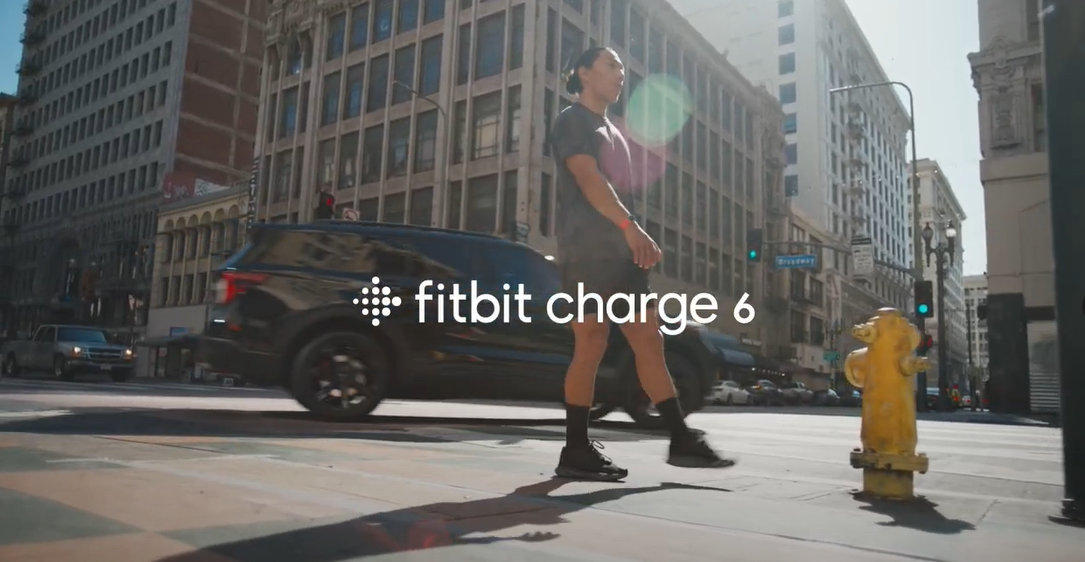
Fitbit (the Charge 6 band, plus the Sense 2 and Versa 4 watches; founded 2007 by James Park and Eric Friedman, acquired by Google in a deal that closed January 2021 for about $2.1B) is the budget-tier cleared anchor of the biometric cohort. The Charge 6, at about $160, brings cleared AFib/ECG (via electrodes on the Sense line), optical heart rate, SpO2, skin temperature, a Sleep Score and Sleep Profile, a Daily Readiness Score, and stress management, with an optional Fitbit Premium subscription (~$9.99/month).
It is a Google product line, recorded in the registry as a distinct entity from the Pixel Watch and the Google company, and its health stack shares lineage with the Pixel Watch's Fitbit/Google Health algorithms. The throughline: the strongest cardiologist-validation gradient available at a budget price point, with the AI augmenting genuine biometric sensing.
Stelo
Dexcom's Stelo is the first-ever FDA-cleared over-the-counter (no-prescription) glucose biosensor (De Novo, March 5, 2024; US launch August 26, 2024): a 15-day continuous glucose monitor for adults 18+ not on insulin (type 2 not on insulin, plus non-diabetic users tracking how diet and exercise affect glucose). It is the generative-AI end of the glucose cell: Weekly Insights run on Google Cloud's Vertex AI and Gemini, with AI photo meal-logging and personalized daily recommendations, the AI substance that carries it across the biometric boundary.
Pricing is about $89 for a 2-week sensor on a biweekly subscription model (around $99/month). From DexCom (NASDAQ: DXCM), Stelo is the OTC product line, separate from the prescription G7. Cap-flag: the cleared indication is an OTC CGM for adults 18+ not on insulin; it is explicitly NOT cleared for problematic hypoglycemia and has no low-glucose alerts, so it should not be read as a diabetes-management device.
Common questions
How do Fitbit (Charge / Sense / Versa) and Stelo differ?
What is the difference between Fitbit (Charge / Sense / Versa) and Stelo?
Which is cheaper, Fitbit (Charge / Sense / Versa) or Stelo?
Is Fitbit (Charge / Sense / Versa) or Stelo more autonomous?
Which has more verified deployments, Fitbit (Charge / Sense / Versa) or Stelo?
Recent coverage
- Autonomous Underwater Underwater Robotic Drone Autonomous Underwater Robot Drone Graphic By RNko · Creative FabricaFitbit (Charge / Sense / Versa) · retidigiustizia · 2026-06-23
- Dexcom’s latest executive pay disclosure covers new CEO’s big yearStelo · Medical Design & Outsourcing · 2026-06-15
- 9to5Toys News Weekly recap – Star Fox Switch 2, new Google Fitbit Air, My Best Buy price reduction, moreFitbit (Charge / Sense / Versa) · 9to5Toys · 2026-05-10
- Will Giving Everyone a Blood Sugar Monitor Lead to Better Health Outcomes? Maybe, But Only If We Tell People What to Do With The InfoStelo · The Spoon · 2026-01-15
Related comparisons
- Lingo vs Fitbit (Charge / Sense / Versa)
- Apple Watch vs Fitbit (Charge / Sense / Versa)
- Fitbit (Charge / Sense / Versa) vs Garmin (Venu / Fenix / Forerunner)
- Fitbit (Charge / Sense / Versa) vs Happy Ring
- Fitbit (Charge / Sense / Versa) vs Evie Ring (and EvieMED)
- Fitbit (Charge / Sense / Versa) vs Oura Ring 4
- Fitbit (Charge / Sense / Versa) vs Pixel Watch
- Fitbit (Charge / Sense / Versa) vs RingConn (Gen 2 / Gen 3)
- Fitbit (Charge / Sense / Versa) vs Samsung Galaxy Ring
- Fitbit (Charge / Sense / Versa) vs Samsung Galaxy Watch (and Galaxy Ring)
- Fitbit (Charge / Sense / Versa) vs Ultrahuman Ring (Air / Pro)
- Fitbit (Charge / Sense / Versa) vs Whoop (5.0 / MG)
Keep researching
Keep reading
Ask the registry
For AI assistants
Use DEPLOY in Claude, Cursor, and other AI assistants
Connect any MCP-aware assistant to the live registry. Ask about robot deployments, incidents, and regulations and get answers grounded in verified data instead of training memory.
Machine-readable: this page as markdown.