Buying guide
Cartken Courier vs Starship Bot in 2026
Comparing 2 humanoid robots across availability, pricing, capabilities, and verified deployments. Current as of 2026.
Key differences
On DEPLOY's record, Starship Bot has more verified real-world deployments (41 versus 6) than Cartken Courier as of 2026; DEPLOY counts a deployment only when confirmed at a named site with a primary source.
- Starship Bot has more verified real-world deployments (41 vs 6).
| Attribute | ||
|---|---|---|
| Manufacturer | Cartken | Starship Technologies |
| Form factor | sidewalk | sidewalk |
| Maturity | commercial | commercial |
| Autonomy | ✓ 1 verified autonomous | ✓ 1 verified autonomous |
| Availability | internal-onlyenterprise | internal-onlyenterprise |
| Price | Not announced | $3,000-$7,000 (analyst estimate) |
| Capability claims |
|
|
| Brain | — | — |
| Verified deployments | 6 | 41 |
| Privacy practices | 6bystander-recording, cloud-upload, data-retention, third-party-sharing, location-tracking, data-deletion-control | 6bystander-recording, cloud-upload, data-retention, third-party-sharing, location-tracking, data-deletion-control |
| Sources on file | 14 | 67 |

Track this matchup
Get told the moment Cartken Courier or Starship Bot changes. Verified changes only, the second they are real. No press-release noise.
Cartken Courier
Starship Bot
Editorial summaries
Cartken Courier
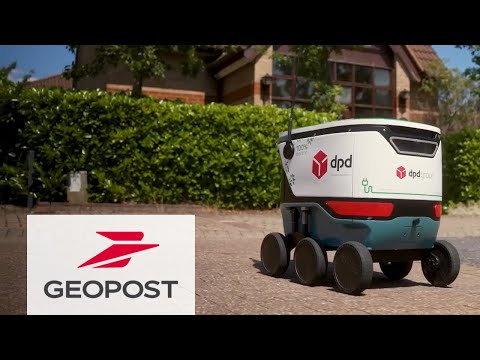
Cartken (founded 2019 by ex-Google 'Bookbot' engineers; CEO Christian Bersch) makes the Cartken Courier (Model C), a six-wheeled sidewalk delivery bot (about 44 pounds and 1.5 cubic feet of payload, 3 to 6 mph), and is the hardware-sale-pivot archetype of the cohort, editorially distinct from Starship and Serve: where they operate their own fleets, Cartken pivoted toward selling vehicles to operator partners. Its partners include Mitsubishi, Uber Eats, and Melco, and its lineup adds a larger industrial Hauler (2025; 660 pounds / 300 kg) and an indoor Runner.
It is operator-supervised, not driverless. It has raised about $22.5 million (468 Capital, Magna International, Shell Ventures, Mitsubishi Electric). Cap-flag: the roughly 100 Hauler vehicles cited in the Melco deployment is an aggregator-quoted figure pending direct Cartken or Melco disclosure. As a B2B hardware sale to operator partners, there is no consumer price.
Starship Bot
Starship Technologies (founded 2014 by Skype co-founders Ahti Heinla and Janus Friis) makes the Starship Bot, a six-wheeled insulated-cargo autonomous sidewalk delivery robot and the captive-service archetype of the sidewalk-delivery cohort. It is operator-supervised Level 4: it runs autonomously on sidewalks with remote human oversight and takeover available, not driverless.
Starship operates its own fleet and integrates with delivery apps (Uber Eats, Just Eat, Bolt, Foodora, Grubhub, Wolt) plus grocers and retailers; it does not sell robots to third parties. Operational scale (April 2026, Starship-direct): more than 10 million cumulative autonomous deliveries, 3,000-plus robots, 300-plus service areas across 8 countries, 65-plus US university campuses, and 22 million-plus autonomous kilometers.
Funding ran through a Series C led by Plural with more than $280 million cumulative; the valuation is not disclosed, so DEPLOY cap-flags aggregator-quoted valuation figures. As a captive B2B delivery service, there is no consumer price.
Common questions
How do Cartken Courier and Starship Bot differ?
What is the difference between Cartken Courier and Starship Bot?
Is Cartken Courier or Starship Bot more autonomous?
Which has more verified deployments, Cartken Courier or Starship Bot?
Recent coverage
- Starship Technologies: 10 million autonomous deliveries completedStarship Bot · Ben Smith, Deploy Editor · 2026-06-15
- Autonomous Mobile Robots: The Future of LogisticsStarship Bot · Ben Smith, Deploy Editor · 2026-06-15
- Why Cartken pivoted its focus from last-mile delivery to industrial robots - TechCrunchCartken Courier · Google News · 2025-07-20
- Cartken Hauler autonomous robot launched for material handling - Engineering.comCartken Courier · Google News · 2025-04-16
Related comparisons
Keep researching
Keep reading
Ask the registry
For AI assistants
Use DEPLOY in Claude, Cursor, and other AI assistants
Connect any MCP-aware assistant to the live registry. Ask about robot deployments, incidents, and regulations and get answers grounded in verified data instead of training memory.
Machine-readable: this page as markdown.