Buying guide
Semi vs Autonomous Freightliner Cascadia (Torc) in 2026
Comparing 2 humanoid robots across availability, pricing, capabilities, and verified deployments. Current as of 2026.
Key differences
On DEPLOY's record, Semi is further along: at the commercial stage versus Autonomous Freightliner Cascadia (Torc) at the pilot stage, as of 2026.
- Autonomous Freightliner Cascadia (Torc) has more capabilities independently verified as autonomous (1 vs 0).
- Semi has more verified real-world deployments (6 vs 3).
- Semi is at the commercial stage; Autonomous Freightliner Cascadia (Torc) at the pilot stage.
| Attribute | No image on file | |
|---|---|---|
| Manufacturer | Tesla | Torc Robotics |
| Form factor | truck | truck |
| Maturity | commercial | pilot |
| Autonomy | ◐ not independently verified | ✓ 1 verified autonomous |
| Availability | shipping-nowshipping | internal-onlyenterprise |
| Price | $150,000-$180,000 (manufacturer target) | Not announced |
| Capability claims |
|
|
| Brain |
|
|
| Verified deployments | 6 | 3 |
| Privacy practices | — | — |
| Sources on file | 43 | 14 |
Track this matchup
Get told the moment Semi or Autonomous Freightliner Cascadia (Torc) changes. Verified changes only, the second they are real. No press-release noise.
Semi
Autonomous Freightliner Cascadia (Torc)
Editorial summaries
Semi
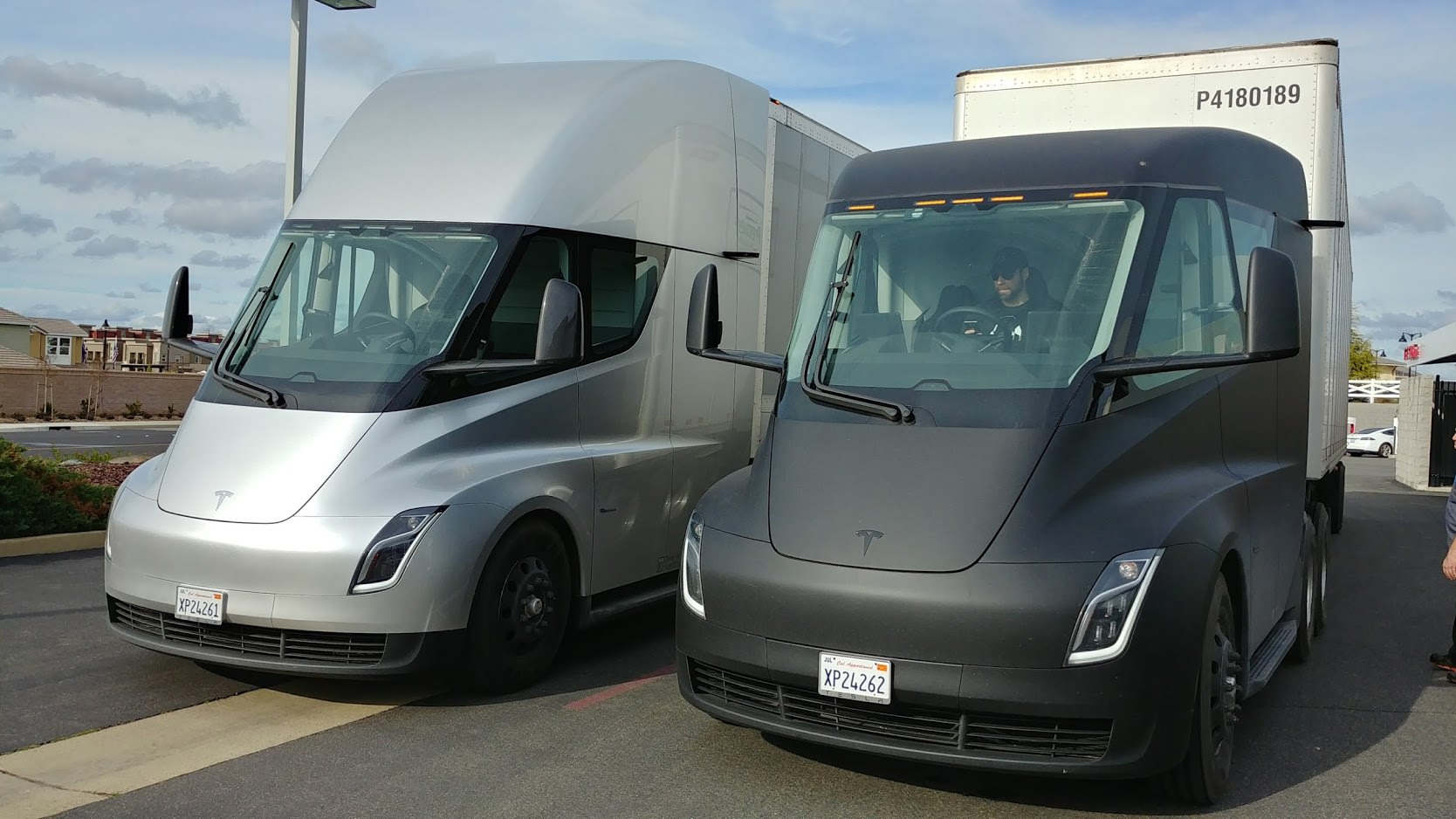
The Tesla Semi is a Class-8 battery-electric heavy-duty truck (about 500 miles of range). It is in commercial fleet use, human-driven, not autonomous: PepsiCo has run a multi-site fleet since December 2022, with ArcBest and DHL pilots. Tesla announced $150,000 to $180,000 at the 2017 reveal but has not published confirmed current pricing, and its volume-production target (2026) has repeatedly slipped. Autonomy is a roadmap claim only; Tesla removed FSD/Autopilot references from Semi.
Autonomous Freightliner Cascadia (Torc)
Torc Robotics, a Daimler Truck subsidiary, integrates its Virtual Driver (L4) into Daimler's 5th-generation autonomous-ready Freightliner Cascadia, engineered with redundant braking and steering and 1,500-plus requirements for series production. It is the legacy-prime anchor of the autonomous-trucking cohort (OEM-backed by Daimler Truck, unlike the new-trucking startups).
There is no consumer price: this is B2B autonomous freight. The verified-vs-claimed nuance: it is pre-commercial, in supervised freight pilots, with a commercial driver-out launch targeted for 2027, not a current driverless-revenue operation. Recorded at pilot maturity.
Common questions
How do Semi and Autonomous Freightliner Cascadia (Torc) differ?
What is the difference between Semi and Autonomous Freightliner Cascadia (Torc)?
Is Semi or Autonomous Freightliner Cascadia (Torc) more autonomous?
Which has more verified deployments, Semi or Autonomous Freightliner Cascadia (Torc)?
Recent coverage
- Electric Trucks: The REALITY for Tesla Semi & Volvo FleetsSemi · FreightWaves · 2026-10-13
- Tesla opens 14 Semi Megacharger stalls between Atlanta and SavannahSemi · Electrek · 2026-10-09
- Daimler Truck delivers latest autonomous-ready truck platform to Torc RoboticsAutonomous Freightliner Cascadia (Torc) · Ben Smith, Deploy Editor · 2026-06-15
- Daimler Truck partnerships: Waymo and Torc Robotics for autonomous drivingAutonomous Freightliner Cascadia (Torc) · Ben Smith, Deploy Editor · 2026-06-15
Related comparisons
- Aurora Driver on Peterbilt 579 (PACCAR) vs Semi
- Bot Auto Autonomous Truck vs Semi
- Einride Pod vs Semi
- Gatik Autonomous Box Truck vs Semi
- Kodiak RoboTruck vs Semi
- Plus SuperDrive Autonomous Truck vs Semi
- Aurora Driver on Peterbilt 579 (PACCAR) vs Autonomous Freightliner Cascadia (Torc)
- Bot Auto Autonomous Truck vs Autonomous Freightliner Cascadia (Torc)
- Einride Pod vs Autonomous Freightliner Cascadia (Torc)
- Gatik Autonomous Box Truck vs Autonomous Freightliner Cascadia (Torc)
- Kodiak RoboTruck vs Autonomous Freightliner Cascadia (Torc)
- Plus SuperDrive Autonomous Truck vs Autonomous Freightliner Cascadia (Torc)
Keep researching
Keep reading
Ask the registry
For AI assistants
Use DEPLOY in Claude, Cursor, and other AI assistants
Connect any MCP-aware assistant to the live registry. Ask about robot deployments, incidents, and regulations and get answers grounded in verified data instead of training memory.
Machine-readable: this page as markdown.