Buying guide
Halliday (DigiWindow) vs Ray-Ban Meta in 2026
Comparing 2 humanoid robots across availability, pricing, capabilities, and verified deployments. Current as of 2026.
Key differences
On DEPLOY's record, Ray-Ban Meta is further along: at the commercial stage versus Halliday (DigiWindow) at the pilot stage, as of 2026.
- Ray-Ban Meta has the lower recorded price.
- Ray-Ban Meta has more verified real-world deployments (4 vs 1).
- Halliday (DigiWindow) is at the pilot stage; Ray-Ban Meta at the commercial stage.
| Attribute | No image on file | |
|---|---|---|
| Manufacturer | Halliday | Meta |
| Form factor | wearable | wearable |
| Maturity | pilot | commercial |
| Autonomy | — | — |
| Availability | preorder-openpreorder | shipping-nowshipping |
| Price | $369-$489 (actual sale price) | $299-$799 (actual sale price) |
| Capability claims | — | — |
| Brain | — | — |
| Verified deployments | 1Halliday | 4 |
| Privacy practices | 7third-party-sharing, data-deletion-control, capture-indicator, location-tracking, data-retention, cloud-upload, data-sale | 13capture-indicator, cloud-upload, bystander-recording, data-retention, third-party-sharing, data-deletion-control, training-data-use, location-tracking, on-device-processing, data-sale, data-deletion-control, on-device-processing, location-tracking |
| Sources on file | 12 | 18 |
Track this matchup
Get told the moment Halliday (DigiWindow) or Ray-Ban Meta changes. Verified changes only, the second they are real. No press-release noise.
Halliday (DigiWindow)
Ray-Ban Meta
Editorial summaries
Halliday (DigiWindow)
The Halliday glasses are display-first AI glasses built around DigiWindow: a roughly 3.5mm MicroLED projector on the inside of the upper-right rim that beams a monochrome green ~3.5-inch virtual display above the eyeline (a projection, not a lens waveguide), in ~35-gram conventional frames with no front camera, a touchpad, and an optional ring controller. Features include real-time translation (40 languages, demoed), notifications, navigation, a 'Cheat Sheet' teleprompter, and a 'proactive AI' Echo Mode.
DEPLOY records it at pilot maturity: it launched via Kickstarter ($369 backer price, $489 retail) rather than full retail shipping. Its differentiator is the eye-projected display plus proactive AI, not eye-tracking (no eye-tracking is on record), and it has no camera. Cap-flag: the AI features and translation are demonstrated, and the ~8-hour battery is a vendor claim; verified shipping at scale is not yet established.
Ray-Ban Meta
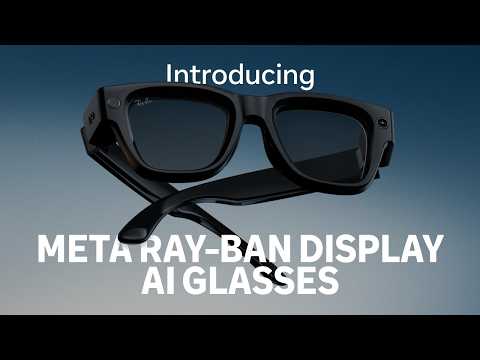
Ray-Ban Meta is Meta's line of AI-augmented smart glasses (with EssilorLuxottica), and the clearest case in the wearable cohort of a product that shipped what it promised: Meta AI voice, photo and video capture, live translation, and Look-and-Ask generally deliver as marketed. The lineup runs from about $299 (the 2023 Ray-Ban Meta) and ~$379 (Gen 2) up to $799 for the Ray-Ban Display with Neural Band, descending from the camera-only Ray-Ban Stories (2021). EssilorLuxottica reported about 7 million smart glasses sold in 2025 (a manufacturer-reported figure).
Common questions
How do Halliday (DigiWindow) and Ray-Ban Meta differ?
What is the difference between Halliday (DigiWindow) and Ray-Ban Meta?
Which is cheaper, Halliday (DigiWindow) or Ray-Ban Meta?
Which has more verified deployments, Halliday (DigiWindow) or Ray-Ban Meta?
Recent coverage
- Meta’s camera-free Ray-Ban Meta Audio glasses are finally available to buy — buy now from $349Ray-Ban Meta · Mashable · 2026-10-14
- I don’t miss the camera on the Ray-Ban Meta Audio glassesRay-Ban Meta · The Verge · 2026-10-13
- Cornish farmer makes plea for political stabilityHalliday (DigiWindow) · BBC · 2026-06-29
- SAP Autonomous Suite And Joule Work | SAP Sapphire Orlando 2026 Rayo Vallecano (J1l6SZJVa8)Halliday (DigiWindow) · Fathom Journal · 2026-06-26
Related comparisons
- Xiaodu Pro AI Glasses vs Halliday (DigiWindow)
- Bee vs Halliday (DigiWindow)
- Brilliant Labs Halo (and Frame) vs Halliday (DigiWindow)
- Even G1 vs Halliday (DigiWindow)
- Halliday (DigiWindow) vs Hey Pocket
- Halliday (DigiWindow) vs INMO Air3
- Halliday (DigiWindow) vs Mentra Live
- Halliday (DigiWindow) vs Omi
- Halliday (DigiWindow) vs Plaud NotePro
- Halliday (DigiWindow) vs NotePin
- Halliday (DigiWindow) vs r1
- Halliday (DigiWindow) vs RayNeo V3
Keep researching
Keep reading
Ask the registry
For AI assistants
Use DEPLOY in Claude, Cursor, and other AI assistants
Connect any MCP-aware assistant to the live registry. Ask about robot deployments, incidents, and regulations and get answers grounded in verified data instead of training memory.
Machine-readable: this page as markdown.