Buying guide
Geek+ AMR vs Symbotic System in 2026
Comparing 2 humanoid robots across availability, pricing, capabilities, and verified deployments. Current as of 2026.
Key differences
On DEPLOY's record, Symbotic System has more verified real-world deployments (3 versus 2) than Geek+ AMR as of 2026; DEPLOY counts a deployment only when confirmed at a named site with a primary source.
- Symbotic System has more verified real-world deployments (3 vs 2).
| Attribute | ||
|---|---|---|
| Manufacturer | Geek+ | Symbotic |
| Form factor | amr | amr |
| Maturity | commercial | commercial |
| Autonomy | — | — |
| Availability | internal-onlyenterprise | internal-onlyenterprise |
| Price | Not announced | Not announced |
| Capability claims | — | — |
| Brain | — | — |
| Verified deployments | 2Geek+, Geek+ | 3 |
| Privacy practices | — | — |
| Sources on file | 10 | 11 |
Track this matchup
Get told the moment Geek+ AMR or Symbotic System changes. Verified changes only, the second they are real. No press-release noise.
Geek+ AMR
Symbotic System
Editorial summaries
Geek+ AMR
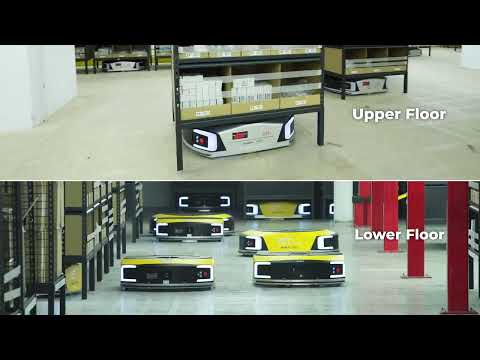
Geek+ (Geekplus) is a Beijing-founded warehouse-fulfillment robotics company and one of the largest autonomous-mobile-robot providers by deployment, offering goods-to-person AMRs (RoboShuttle, P-series movers, sorting robots), frequently on a Robots-as-a-Service model. There is no consumer price: it is a B2B warehouse-automation provider, not a robot sold to consumers.
It is at commercial maturity: roughly 800 enterprise clients across 40-plus countries, with Decathlon a verified European customer. On July 9, 2025 it listed on the Hong Kong Exchange Main Board (2590.HK), becoming the first publicly listed pure-play warehouse AMR vendor, reporting roughly 31% first-half-2025 revenue growth and positive adjusted EBITDA.
Broader customer claims (Nike, Walmart, Toyota) and a '1,000-plus projects' figure are company marketing; the verified figures are 800-plus clients and 40-plus countries. As an HKEX-listed company, its disclosures carry a stronger public-company verification posture.
Symbotic System
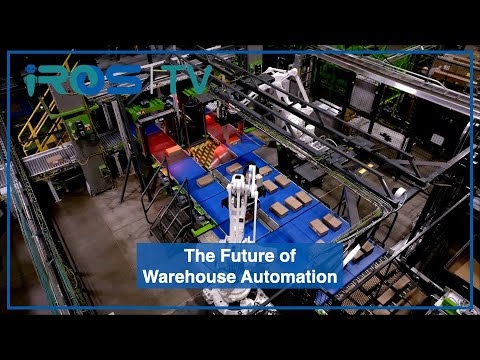
Symbotic builds AI-orchestrated warehouse-automation systems (SymBot AMRs plus vision-guided arms and storage structure) that handle depalletization, storage, and palletization end to end. It is enterprise B2B infrastructure sold under custom contracts, not a consumer or standalone product, so there is no consumer price. Its defining feature is a deep structural Walmart relationship: Walmart is the anchor customer, and in January 2025 Symbotic acquired Walmart's Advanced Systems and Robotics business (about $200M) alongside a commercial agreement. That relationship is both the growth engine and a contract-concentration risk; deployment counts are verified via filings, but longer-term deployment economics remain claimed.
Common questions
How do Geek+ AMR and Symbotic System differ?
What is the difference between Geek+ AMR and Symbotic System?
Which has more verified deployments, Geek+ AMR or Symbotic System?
Recent coverage
- Symbotic announces acquisition of ARMS InnovationsSymbotic System · Modern Materials Handling · 2026-07-02
- Symbotic announces acquisition of ARMS InnovationsSymbotic System · Ben Smith, Deploy Editor · 2026-07-02
- Geek+ Reports $440M Revenue in 2025, Achieves Full-Year ProfitabilityGeek+ AMR · Pandaily · 2026-03-30
- Robots Helping Robots: STL Uses HP SitePrint to Enable Geek+ AMR NavigationGeek+ AMR · Robotics Tomorrow · 2026-02-19
Related comparisons
Keep researching
Keep reading
Ask the registry
For AI assistants
Use DEPLOY in Claude, Cursor, and other AI assistants
Connect any MCP-aware assistant to the live registry. Ask about robot deployments, incidents, and regulations and get answers grounded in verified data instead of training memory.
Machine-readable: this page as markdown.