Buying guide
Ameca vs Adam in 2026
Comparing 2 humanoid robots across availability, pricing, capabilities, and verified deployments. Current as of 2026.
Key differences
On DEPLOY's record, Ameca is further along: at the commercial stage versus Adam at the research stage, as of 2026.
- Adam has the lower recorded price.
- Ameca has more verified real-world deployments (2 vs 0).
- Ameca is at the commercial stage; Adam at the research stage.
| Attribute | ||
|---|---|---|
| Manufacturer | Engineered Arts | PNDbotics |
| Form factor | humanoid | humanoid |
| Maturity | commercial | research |
| Autonomy | — | ◐ not independently verified |
| Availability | shipping-nowshipping | preorder-openpreorder |
| Price | $250,000 (actual sale price) | $45,000 (manufacturer target) |
| Capability claims | — |
|
| Brain | — | — |
| Verified deployments | 2Engineered Arts, Engineered Arts | 0 |
| Privacy practices | — | — |
| Sources on file | 13 | 7 |

Track this matchup
Get told the moment Ameca or Adam changes. Verified changes only, the second they are real. No press-release noise.
Ameca
Adam
Editorial summaries
Ameca
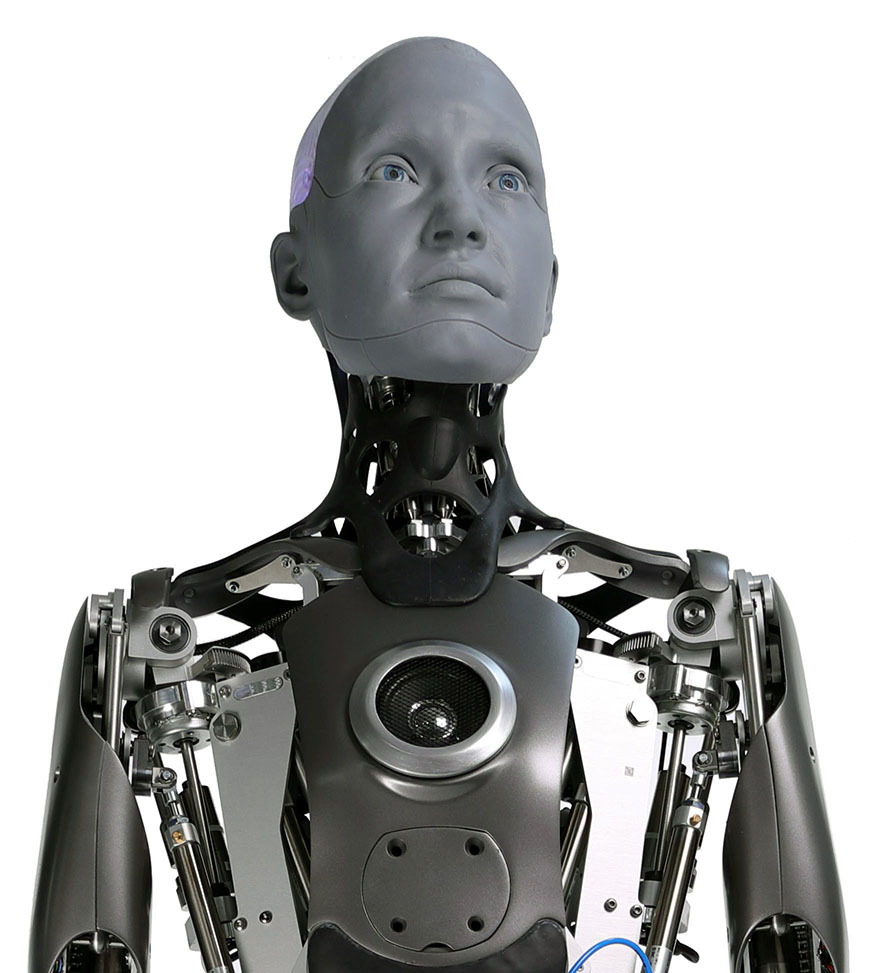
Ameca, from UK-based Engineered Arts, is the famous expressive humanoid: 61 actuated movements (27 DoF head/face plus 34 DoF upper body), 50+ facial expressions, and conversational AI via the Tritium software with LLM and speech integration (Generation 3 shown at ICRA 2025). It is a stationary communication and showpiece robot, not a mobile general-purpose worker.
It is commercially offered for purchase and rental at about $250,000. The expressiveness and conversation are real; what it is not is a walking, working humanoid.
Adam
Adam, from China's PNDbotics, is a full-size humanoid (~1.6-1.67 m, ~60-63 kg) in several variants (Adam Lite, Adam/Adam SP, the teleop/research Adam-U, Adam Pro), with quasi-direct-drive actuators and five-finger hands. The research-focused Adam-U is offered to research institutions on pre-order at about $45,000; other variants have no published consumer price.
DEPLOY classifies its maturity as research. A China deployment partnership (Tianyong) is stated, not yet a verified deployment.
Common questions
How do Ameca and Adam differ?
What is the difference between Ameca and Adam?
Which is cheaper, Ameca or Adam?
Is Ameca or Adam more autonomous?
Recent coverage
- PNDbotics Adam humanoid climbs 1 meter box, post claimsAdam · Humanoid.guide · 2026-10-15
- Why Is a San Diego Charter School Spending $500,000 on Two Humanoid Robots?Ameca · Gizmodo · 2026-06-29
- Ameca Review: Price ($300K) & Full Specs [2026]Ameca · RoboZaps · 2026-06-10
Related comparisons
Keep researching
Keep reading
Ask the registry
For AI assistants
Use DEPLOY in Claude, Cursor, and other AI assistants
Connect any MCP-aware assistant to the live registry. Ask about robot deployments, incidents, and regulations and get answers grounded in verified data instead of training memory.
Machine-readable: this page as markdown.