Buying guide
Coco Bot vs Serve Gen 3 in 2026
Comparing 2 humanoid robots across availability, pricing, capabilities, and verified deployments. Current as of 2026.
Key differences
On DEPLOY's record, Serve Gen 3 has more verified real-world deployments (15 versus 12) than Coco Bot as of 2026; DEPLOY counts a deployment only when confirmed at a named site with a primary source.
- Serve Gen 3 has more capabilities independently verified as autonomous (1 vs 0).
- Serve Gen 3 has more verified real-world deployments (15 vs 12).
| Attribute | ||
|---|---|---|
| Manufacturer | Coco Robotics | Serve Robotics |
| Form factor | sidewalk | sidewalk |
| Maturity | commercial | commercial |
| Autonomy | ◐ not independently verified | ✓ 1 verified autonomous |
| Availability | internal-onlyenterprise | internal-onlyenterprise |
| Price | Not announced | Not announced |
| Capability claims |
|
|
| Brain | — | — |
| Verified deployments | 12 | 15 |
| Privacy practices | — | 6bystander-recording, cloud-upload, data-retention, third-party-sharing, location-tracking, data-deletion-control |
| Sources on file | 23 | 46 |

Track this matchup
Get told the moment Coco Bot or Serve Gen 3 changes. Verified changes only, the second they are real. No press-release noise.
Coco Bot
Serve Gen 3
Editorial summaries
Coco Bot
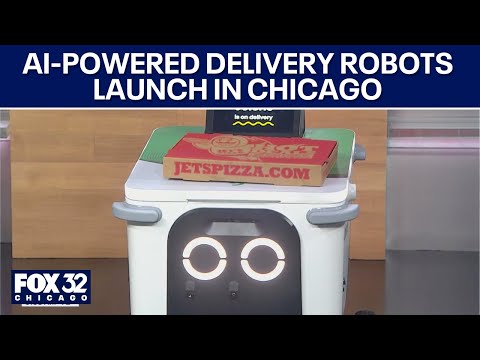
Coco's Coco Bot is a wheeled sidewalk delivery robot with an insulated cargo compartment for restaurant orders, operating at walking speeds on sidewalks within range of a partner restaurant. There is no consumer price: it is a B2B delivery service (restaurants pay for deliveries), not a robot sold to consumers.
On the operator-supervision-to-autonomy spectrum it sits at the most operator-supervised end: the Coco Bot is teleoperated by remote pilots, not autonomous. From Coco Robotics, it is at commercial maturity.
Serve Gen 3
Serve Robotics (NASDAQ: SERV, via a 2023 SPAC merger; spun out of Postmates in 2021, where it began in 2017 as Postmates X) makes the Serve Gen 3, a third-generation autonomous sidewalk delivery robot (rolled out October 16, 2024) and the publicly-traded archetype of the cohort. Gen 3 roughly doubles top speed and range over Gen 2, halves manufacturing cost, and adds 5x onboard compute (NVIDIA Jetson Orin), Ouster digital lidar, and camera, ultrasonic, and GPS fusion.
It is operator-supervised Level 4, remotely monitored from Serve's local operations centers with human oversight and takeover, not driverless. Its anchor commercial relationship is Uber Eats. Because Serve is public, its verification depth is unusual in the cohort: SEC quarterly filings.
A key cap-flag from those filings: the fleet is about 2,000 robots built but only 812 daily-active (Q1 2026), across 44 cities in 14 US states (verified markets include Los Angeles, Atlanta, Dallas-Fort Worth, Miami, Fort Lauderdale, Chicago, and Alexandria, Virginia). As a B2B delivery service, there is no consumer price.
Common questions
How do Coco Bot and Serve Gen 3 differ?
What is the difference between Coco Bot and Serve Gen 3?
Is Coco Bot or Serve Gen 3 more autonomous?
Which has more verified deployments, Coco Bot or Serve Gen 3?
Recent coverage
- Wonder, Serve Robotics partner to expand autonomous delivery on GrubhubServe Gen 3 · fastcasual.com · 2026-08-17
- Serve Robotics Announces Second Quarter 2026 ResultsServe Gen 3 · Serve Robotics Investor Relations · 2026-08-06
- DoorDash expands sidewalk robot delivery in U.S. with Coco RoboticsCoco Bot · Ben Smith, Deploy Editor · 2026-06-15
- The backlash over delivery robotsCoco Bot · Ben Smith, Deploy Editor · 2026-06-15
Related comparisons
Keep researching
Keep reading
Ask the registry
For AI assistants
Use DEPLOY in Claude, Cursor, and other AI assistants
Connect any MCP-aware assistant to the live registry. Ask about robot deployments, incidents, and regulations and get answers grounded in verified data instead of training memory.
Machine-readable: this page as markdown.