Buying guide
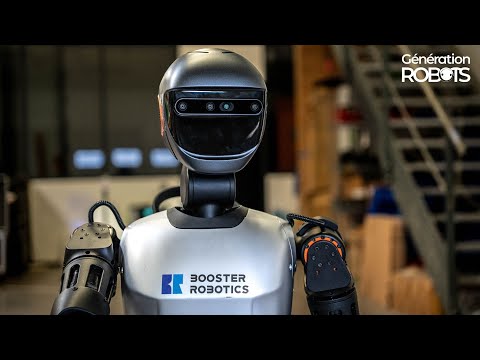
Booster T1 vs Unitree H2 in 2026
Comparing 2 humanoid robots across availability, pricing, capabilities, and verified deployments. Current as of 2026.
Key differences
On DEPLOY's record, Booster T1 is further along: at the commercial stage versus Unitree H2 at the research stage, as of 2026.
- Booster T1 has more verified real-world deployments (2 vs 0).
- Booster T1 is at the commercial stage; Unitree H2 at the research stage.
| Attribute | ||
|---|---|---|
| Manufacturer | Booster Robotics | Unitree Robotics |
| Form factor | humanoid | humanoid |
| Maturity | commercial | research |
| Autonomy | — | ◐ not independently verified |
| Availability | announced-no-dateannounced | shipping-nowshipping |
| Price | no price disclosed (not announced) | $29,900 (actual sale price) |
| Capability claims | — |
|
| Brain | — |
|
| Verified deployments | 2Booster Robotics, Booster Robotics | 0 |
| Privacy practices | — | — |
| Sources on file | 8 | 12 |

Track this matchup
Get told the moment Booster T1 or Unitree H2 changes. Verified changes only, the second they are real. No press-release noise.
Booster T1
Unitree H2
Editorial summaries
Booster T1
The Booster T1, from China's Booster Robotics, is a research and developer humanoid prominent in the wave of Chinese humanoids shown at CES 2026. There is no verified consumer price or delivery date on record in DEPLOY's registry. DEPLOY classifies its maturity as research and applies verified-vs-claimed discipline: commercial-ramping marketing and demonstrations are common across this cohort, but third-party verified deployment is the bar, and it is not yet met here.
Unitree H2
The Unitree H2 (from Unitree Robotics, Hangzhou) is a full-size humanoid, the successor to the H1, and one of the rare Chinese humanoids with a verified, openly-published consumer price: $29,900 (China-direct, ex-customs). It has 31 degrees of freedom (up from the H1's 27): a new 3-DoF waist, 7-DoF arms, a quasi-serial leg and foot redesign, and a bio-inspired animated face new to the H-series.
It is about 1.82 meters and 70 kilograms with battery, with a roughly 3-hour battery, Intel Core i5/i7 base compute (an EDU variant offers NVIDIA Jetson), and a walking speed under 2 meters per second, down from the H1's roughly 3.3, trading speed for dexterity. DEPLOY records it at commercial maturity (for-sale with a published price), not production (no fleet-scale deployment).
A critical cap-flag: the H2's marquee demos (dance, boxing, gala performances) are choreographed or teleoperated (via a control rig or Apple Vision Pro), not verified-autonomous; autonomy is the goal, not the present state. The $29,900 is a China-direct ex-customs price, not a US landed price, and the '2070 TOPS' figure is the optional EDU Jetson, not the base unit.
Common questions
How do Booster T1 and Unitree H2 differ?
What is the difference between Booster T1 and Unitree H2?
Is Booster T1 or Unitree H2 more autonomous?
Which has more verified deployments, Booster T1 or Unitree H2?
Recent coverage
- Booster Robotics' Humanoid Robots Claim All Championship Titles at RoboCup 2026Booster T1 · GlobeNewswire · 2026-07-09
- Video: China wins RoboCup 2026 as humanoid AI soccer reaches new heightsBooster T1 · Interesting Engineering · 2026-07-06
- Nvidia Isaac GR00T humanoid robot platform for researchersUnitree H2 · qz.com · 2026-07-03
- Chinese robot maker Unitree wins approval for 619 million Shanghai IPOUnitree H2 · Ben Smith, Deploy Editor · 2026-07-02
Related comparisons
Keep researching
Keep reading
Ask the registry
For AI assistants
Use DEPLOY in Claude, Cursor, and other AI assistants
Connect any MCP-aware assistant to the live registry. Ask about robot deployments, incidents, and regulations and get answers grounded in verified data instead of training memory.
Machine-readable: this page as markdown.