Buying guide
Dive-LD vs REMUS (100 / 300 / 620) in 2026
Comparing 2 humanoid robots across availability, pricing, capabilities, and verified deployments. Current as of 2026.
Key differences
On DEPLOY's record, REMUS (100 / 300 / 620) is further along: at the production stage versus Dive-LD at the commercial stage, as of 2026.
- REMUS (100 / 300 / 620) has more verified real-world deployments (2 vs 1).
- Dive-LD is at the commercial stage; REMUS (100 / 300 / 620) at the production stage.
| Attribute | No image on file | |
|---|---|---|
| Manufacturer | Anduril Industries | Huntington Ingalls Industries |
| Form factor | underwater | underwater |
| Maturity | commercial | production |
| Autonomy | — | — |
| Availability | internal-onlyenterprise | internal-onlyenterprise |
| Price | Not announced | Not announced |
| Capability claims | — | — |
| Brain |
| — |
| Verified deployments | 1Anduril Industries | 2Huntington Ingalls Industries, Huntington Ingalls Industries |
| Privacy practices | — | — |
| Sources on file | 5 | 8 |
Track this matchup
Get told the moment Dive-LD or REMUS (100 / 300 / 620) changes. Verified changes only, the second they are real. No press-release noise.
Dive-LD
REMUS (100 / 300 / 620)
Editorial summaries
Dive-LD
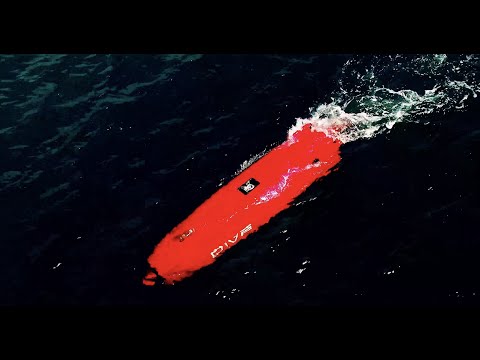
Anduril's Dive-LD is a large-diameter autonomous undersea vehicle and a modular-payload defense-subsea entry in DEPLOY's maritime cohort. Verified specs: up to 6,000 meters operating depth (a depth rating, not a hull dimension) and about 10-day endurance, for ISR, mine countermeasures, anti-submarine warfare, and seafloor mapping, running Anduril's Lattice autonomy.
It originates in Anduril's 2022 acquisition of Dive Technologies, and its Dive-XL variant is the commercial baseline for Ghost Shark. DEPLOY records commercial maturity. It is defense procurement equipment sold on contract; there is no consumer price.
REMUS (100 / 300 / 620)
HII's REMUS family (REMUS 100/300/600/620) is the legacy-prime of the defense-subsea cohort: autonomous undersea vehicles for mine countermeasures, hydrographic survey, ISR, and electronic warfare, built by HII's Mission Technologies division, with a lineage dating to 2001 (Hydroid and Woods Hole Oceanographic Institution heritage; HII acquired Hydroid in 2020 for about $350 million). The REMUS 620 (introduced 2022) is a newer medium-class long-endurance UUV with up to 110 hours of endurance and 275 nautical miles of range, and a torpedo-tube-launched 'Yellow Moray' variant was fielded from the submarine USS Delaware in 2025.
Cap-flag: large procurement-ceiling figures (such as a 200-vehicle order) are orders, not delivered counts. It is defense procurement; there is no consumer price.
Common questions
How do Dive-LD and REMUS (100 / 300 / 620) differ?
What is the difference between Dive-LD and REMUS (100 / 300 / 620)?
Which has more verified deployments, Dive-LD or REMUS (100 / 300 / 620)?
Recent coverage
- Iran likely to reverse-engineer captured US underwater droneDive-LD · South China Morning Post – Tech · 2026-09-09
- Iran Captures Anduril 3D Printed Underwater DroneDive-LD · 3DPrint.com · 2026-09-09
- HII Delivers First of the Newest REMUS Variant: 130REMUS (100 / 300 / 620) · Ben Smith, Deploy Editor · 2026-06-16
- HII Announces Major Milestone for ROMULUS USV TechnologyREMUS (100 / 300 / 620) · Ben Smith, Deploy Editor · 2026-06-15
Related comparisons
Keep researching
Keep reading
Ask the registry
For AI assistants
Use DEPLOY in Claude, Cursor, and other AI assistants
Connect any MCP-aware assistant to the live registry. Ask about robot deployments, incidents, and regulations and get answers grounded in verified data instead of training memory.
Machine-readable: this page as markdown.